Kayak Essentials: How to Choose the Best Gear and Master Your Paddles
Ready to dive into kayaking but unsure where to start with gear and paddling? This guide unveils essential kayak gear choices and effective paddle techniques for a smooth start.
Choosing the Right Kayak Gear: A Beginner’s Guide
Kayaking is an incredible way to explore the water, but having the right gear is crucial for safety, comfort, and performance. Here’s a breakdown of essential kayak gear to get you started.
Kayak Selection: Finding the Perfect Fit
Your kayak is your primary piece of equipment. Consider these factors:
- Type of Kayak: Recreational kayaks are great for calm lakes and rivers, while touring kayaks are better suited for longer distances and open water. Sit-on-top kayaks are easy to enter and exit, making them ideal for beginners.
- Length and Width: Longer kayaks are generally faster and track straighter, while wider kayaks offer more stability. Choose a kayak that matches your body size and experience level.
- Material: Plastic kayaks are durable and affordable, while composite kayaks are lighter and offer better performance.
Kayak Paddles: The Engine of Your Kayak
Choosing the right paddle can significantly impact your kayaking experience. Consider these factors:
Paddle Length: Reaching the Water Effectively
The correct paddle length depends on your height and the width of your kayak. Here’s a general guideline:
- Shorter paddles are better for wider kayaks and taller paddlers.
- Longer paddles are better for narrower kayaks and shorter paddlers.
Paddle Blade Shape: Power and Efficiency
The shape of the paddle blade affects how efficiently you can move through the water. Common shapes include:
- Flat Blades: Provide a consistent power stroke and are suitable for recreational kayaking.
- Spoon Blades: Offer more power and efficiency, ideal for touring and longer distances.
- Wing Blades: Designed for high-performance paddling and racing.
Paddle Material: Lightweight and Durable
Paddle material affects weight, durability, and performance. Popular choices include:
- Aluminum: Affordable and durable, but heavier than other options.
- Fiberglass: Lighter and more flexible than aluminum, offering better performance.
- Carbon Fiber: The lightest and stiffest option, providing maximum power transfer.
Essential Safety Gear: Prioritizing Your Well-being
Safety should always be your top priority when kayaking. Make sure you have the following essential safety gear:
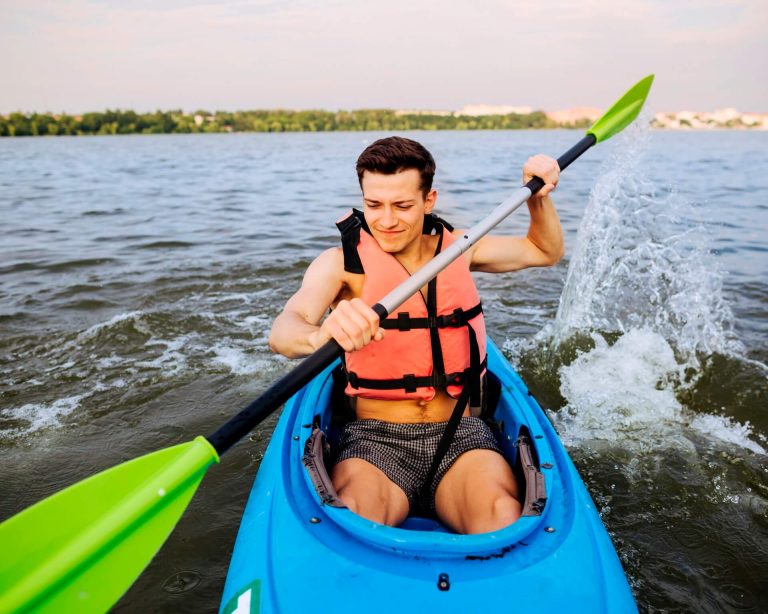
Personal Flotation Device (PFD): Staying Afloat
A PFD is the most important piece of safety gear. Choose a PFD that fits properly and is approved by the Coast Guard.
Whistle: Signaling for Help
A whistle is essential for signaling for help in case of an emergency. Attach it to your PFD for easy access.
Dry Bag: Protecting Your Valuables
A dry bag will keep your phone, wallet, and other valuables safe and dry. Choose a waterproof bag with a secure closure.
Sun Protection: Shielding Yourself from the Elements
Protect yourself from the sun with sunscreen, a hat, and sunglasses. Consider wearing long sleeves and pants for added protection.
Mastering Basic Paddle Techniques: Glide with Confidence
Once you have the right gear, it’s time to learn basic paddle techniques to improve your efficiency and control.
Forward Stroke: Moving Forward with Power
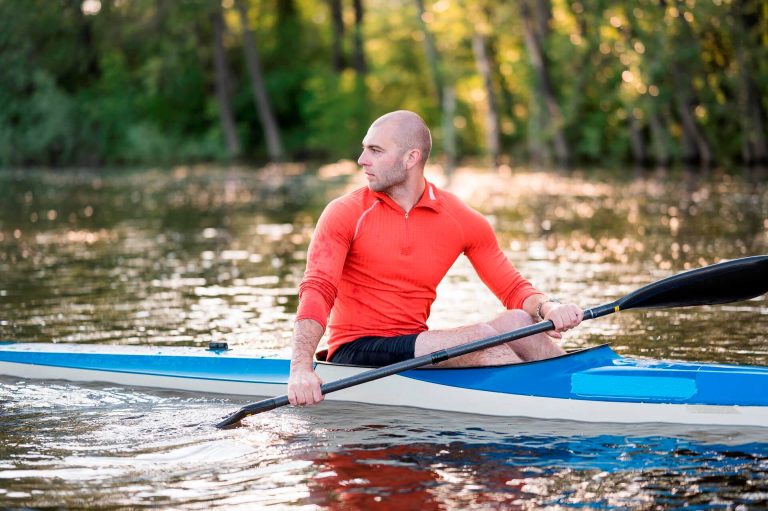
The forward stroke is the most fundamental paddling technique. Here’s how to perform it correctly:
- Reach forward with the paddle blade and plant it in the water near your toes.
- Rotate your torso and pull the paddle blade back along the side of your kayak.
- Remove the paddle blade from the water and repeat on the other side.
Sweep Stroke: Turning with Ease
The sweep stroke is used to turn your kayak. Here’s how to perform it correctly:
- Reach forward with the paddle blade and plant it in the water near the bow of your kayak.
- Sweep the paddle blade in a wide arc towards the stern.
- Repeat on the opposite side to turn in the other direction.
Reverse Stroke: Stopping and Backing Up
The reverse stroke is used to stop your kayak or back up. Here’s how to perform it correctly:
- Plant the paddle blade in the water near your hip.
- Pull the paddle blade forward towards the bow of your kayak.
- Repeat on the other side to back up in a straight line.
Conclusion: Embark on Your Kayaking Adventure
With the right gear and basic paddle techniques, you’re ready to embark on your kayaking adventure. Remember to prioritize safety, practice your skills, and enjoy the beauty of the water. Happy kayaking!