Find Your Perfect Paddle Partner: A Guide to Lightweight Kayaks and Gear
Ready to dive into kayaking but unsure where to start? Discover the world of lightweight kayaks and essential gear for unforgettable adventures on the water. This guide will help you navigate the exciting world of kayaking, focusing on lightweight options perfect for beginners and seasoned paddlers alike.
Understanding the Appeal of Lightweight Kayaks
Lightweight kayaks offer numerous advantages over their heavier counterparts, making them an excellent choice for a wide range of paddlers. The primary benefits include:
- Easier Transportation: Lifting and carrying a kayak is a major consideration. Lightweight kayaks significantly reduce strain, especially for solo adventurers or those with limited strength.
- Improved Maneuverability: Lighter kayaks respond quicker to your paddle strokes, providing enhanced control and agility on the water. This is especially beneficial in tight spaces or challenging conditions.
- Reduced Fatigue: Paddling a lighter kayak requires less effort, allowing you to enjoy longer excursions without excessive fatigue.
- Simplified Storage: Finding storage space for a kayak can be tricky. Lightweight kayaks are easier to handle and store, whether in your garage, on a rooftop rack, or even in an apartment.
Key Considerations When Choosing a Lightweight Kayak
Selecting the right lightweight kayak involves considering various factors to ensure it meets your specific needs and preferences. Here are some crucial aspects to evaluate:
Kayak Type
Different kayak types cater to various paddling styles and environments. Here’s a breakdown of popular options:
- Sit-on-Top Kayaks: These kayaks are open-decked, allowing you to sit on top of the hull. They are generally stable, easy to enter and exit, and self-bailing, making them ideal for recreational paddling, fishing, and warm-weather conditions.
- Sit-Inside Kayaks: Featuring an enclosed cockpit, sit-inside kayaks offer greater protection from the elements and a lower center of gravity, enhancing stability and performance. They are well-suited for touring, sea kayaking, and cooler climates.
- Inflatable Kayaks: Made from durable, puncture-resistant materials, inflatable kayaks are incredibly portable and easy to store. They offer surprisingly good performance and are suitable for recreational paddling, touring, and even whitewater kayaking (depending on the model).
- Folding Kayaks: A hybrid between traditional hard-shell kayaks and inflatables, folding kayaks offer excellent portability and performance. They fold down into a compact package for easy transportation and storage.
Material
The material used in kayak construction significantly impacts its weight, durability, and performance. Common materials include:
- Polyethylene: A durable and affordable plastic, polyethylene kayaks are resistant to impact and abrasion. However, they tend to be heavier than kayaks made from other materials.
- Fiberglass: Fiberglass kayaks are lightweight, strong, and offer excellent performance. They are more expensive than polyethylene kayaks but provide superior speed and handling.
- Carbon Fiber: The lightest and stiffest material option, carbon fiber kayaks deliver exceptional performance and are highly sought after by experienced paddlers. They are the most expensive type of kayak.
- PVC (Inflatable Kayaks): High-quality PVC materials offer excellent durability and resistance to punctures, making inflatable kayaks surprisingly robust.
Size and Weight Capacity
Choose a kayak that is appropriately sized for your height and weight. Consider the kayak’s weight capacity and ensure it can comfortably accommodate you and any gear you plan to carry.
Essential Kayak Gear for a Safe and Enjoyable Experience
Beyond the kayak itself, certain gear items are crucial for a safe and enjoyable kayaking experience. Here are some must-have essentials:
Kayak Paddle
A good kayak paddle is essential for propulsion and control. Consider the following factors when choosing a paddle:
- Paddle Length: The appropriate paddle length depends on your height and the width of your kayak. Consult a paddle sizing chart for guidance.
- Blade Shape: Different blade shapes are designed for different paddling styles. High-angle blades are suitable for aggressive paddling, while low-angle blades are ideal for relaxed touring.
- Material: Paddle materials include aluminum, fiberglass, and carbon fiber. Lighter materials reduce fatigue and improve performance.
Personal Flotation Device (PFD)
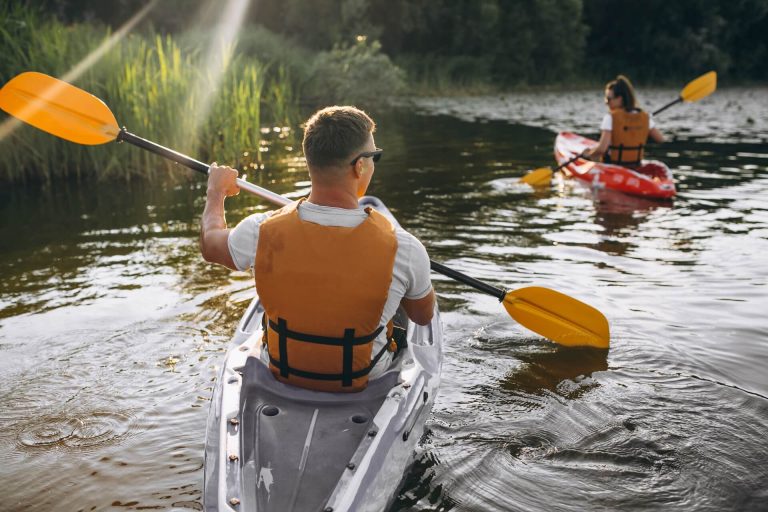
A properly fitted PFD is non-negotiable for kayaking safety. Choose a PFD that is Coast Guard-approved and fits comfortably. Always wear it while on the water.
Spray Skirt (for Sit-Inside Kayaks)
A spray skirt seals the cockpit of a sit-inside kayak, preventing water from entering and keeping you dry and warm. It’s essential for paddling in cooler conditions or choppy waters.
Bilge Pump or Sponge
A bilge pump or sponge is used to remove water that accumulates inside the kayak. This is particularly important for sit-inside kayaks.
Dry Bag
Protect your valuables, such as your phone, wallet, and camera, in a waterproof dry bag.
Navigation Tools
Carry a map and compass or a GPS device to navigate effectively, especially on longer trips.
Sun Protection
Protect yourself from the sun’s harmful rays with sunscreen, a hat, and sunglasses.
Tips for Using Your Lightweight Kayak
Once you’ve chosen your kayak and gear, it’s time to hit the water! Here are some tips for a safe and enjoyable paddling experience:
- Practice basic paddling techniques in a calm, sheltered area before venturing into more challenging conditions.
- Learn how to perform a self-rescue in case you capsize.
- Be aware of weather conditions and avoid paddling in strong winds or thunderstorms.
- File a float plan with someone before you go, letting them know your route and expected return time.
- Respect wildlife and avoid disturbing sensitive areas.
- Leave no trace – pack out everything you pack in.
Conclusion: Embrace the Lightweight Kayak Adventure
Lightweight kayaks offer a fantastic way to explore the waterways and enjoy the beauty of nature. By carefully considering your needs and choosing the right kayak and gear, you can embark on unforgettable paddling adventures. So, grab your paddle, hit the water, and discover the joys of kayaking!